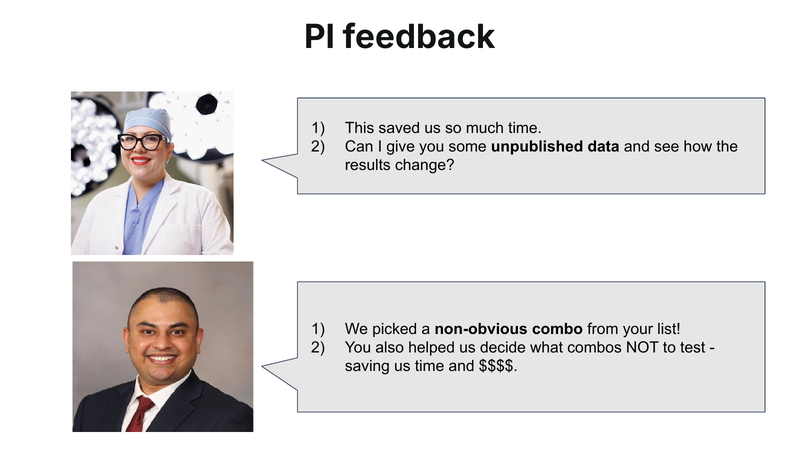
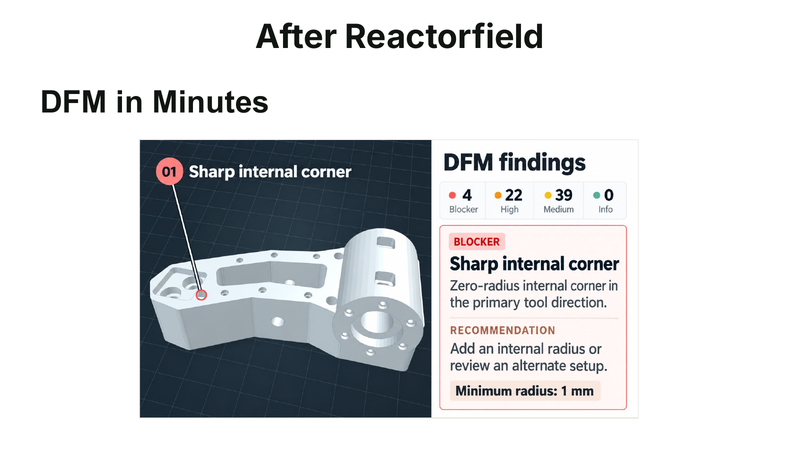
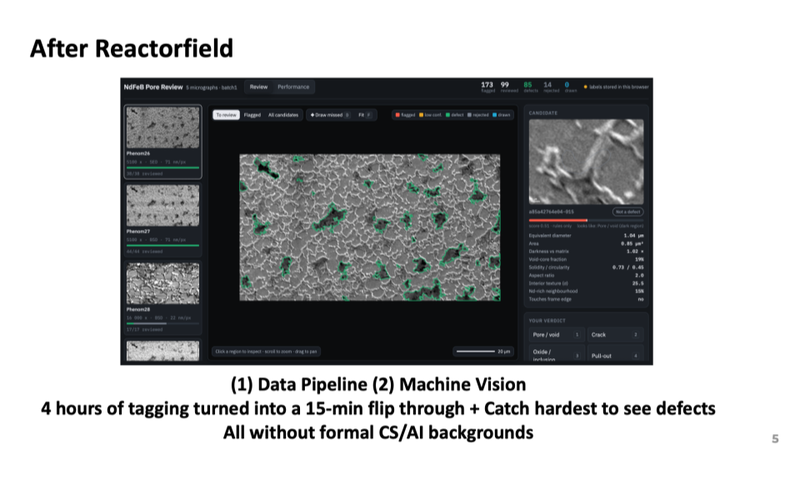
A published nerve-reflex result needed a grant for its next experiments
Brian S. Kim, MD, is Northwell Health’s chief biotechnology officer, with a laboratory at its Feinstein Institutes for Medical Research. His clinical trial designs contributed to FDA approvals of topical ruxolitinib for atopic dermatitis and dupilumab for prurigo nodularis, a condition that causes intensely itchy skin nodules. He has authored more than 180 peer-reviewed publications and co-founded Alys Pharmaceuticals, which launched in February 2024 with $100 million from Medicxi. He has held NIH funding continuously since 2011.
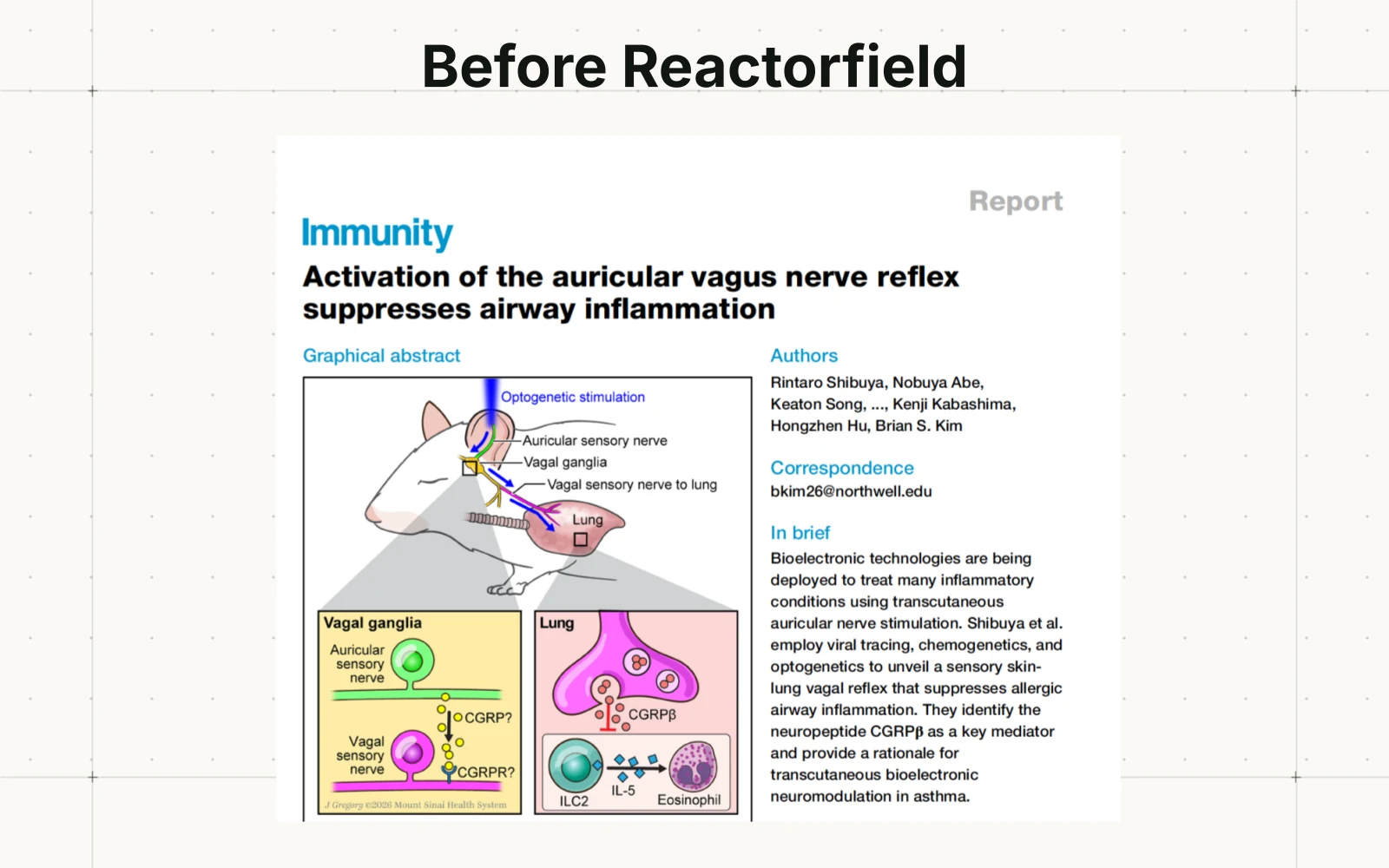
His team’s mouse study, “Activation of the auricular vagus nerve reflex suppresses airway inflammation,” used viral tracing, chemogenetics and optogenetics, methods that map nerve connections and activate selected neurons, to investigate a sensory pathway from the skin to the lung. It identified the neuropeptide CGRPβ as a key mediator. Still unknown is how ear sensory neurons recruit the vagal neurons that reach an internal organ. Explaining this link could unlock guide noninvasive bioelectronic approaches.
Testing this requires funding research experiments. “I spend more time writing grants than doing science,” Kim said at Demo Day. In his account, a first rough draft took six to eight weeks. With Reactorfield, he tested whether a model could assemble an NIH application from his laboratory’s existing evidence and ideas.
From a one-hour draft to an audited 14-page NIH proposal
-
One hour of active work produced 12 pages. Kim, who said he had no background in technology or AI when he began, gave Claude his paper, research questions, prior work and research history, and the model organized them into a first draft. “The AI converted my science to a decent v1 grant,”
-
The draft set out testable aims. Its first aim proposes that CGRP signaling links ear sensory neurons to vagal neurons serving internal organs, comparing disruption in vagal ganglia, clusters of nerve cell bodies, with disruption at the lung. An alternative has CGRP acting directly on ILC2s, immune cells involved in inflammation.
-
A planned second aim targets the gut. The proposal asks whether activating auricular vagal sensory neurons can suppress colitis in mice and whether CGRPβ from vagal ganglia is necessary, using dual retrograde tracing and calcium imaging.
-
Claude flagged an aim that lacked evidence. During Reactorfield Office Hours, Kim described how Claude recognized that one proposed research aim lacked preliminary evidence and flagged the gap without being asked.
-
Kim tried a critique-first review loop. Reactorfield’s guidance had Claude name the most consequential reviewer concerns without rewriting anything, left Kim to accept or reject each, and had the model integrate approved changes with a change log.
-
A simulated study section found five structural gaps. A PubMed citation check also caught a Nature paper Kim had cited as support that described a competing mechanism, and the review surfaced two of his strongest results in supplementary panels.
-
Kim said the feedback loop was powerful. Feedback that normally arrived from colleagues over weeks or months could be generated by the model, so the draft could be challenged while the paper, figures and proposed aims were all handled in the same working context.
-
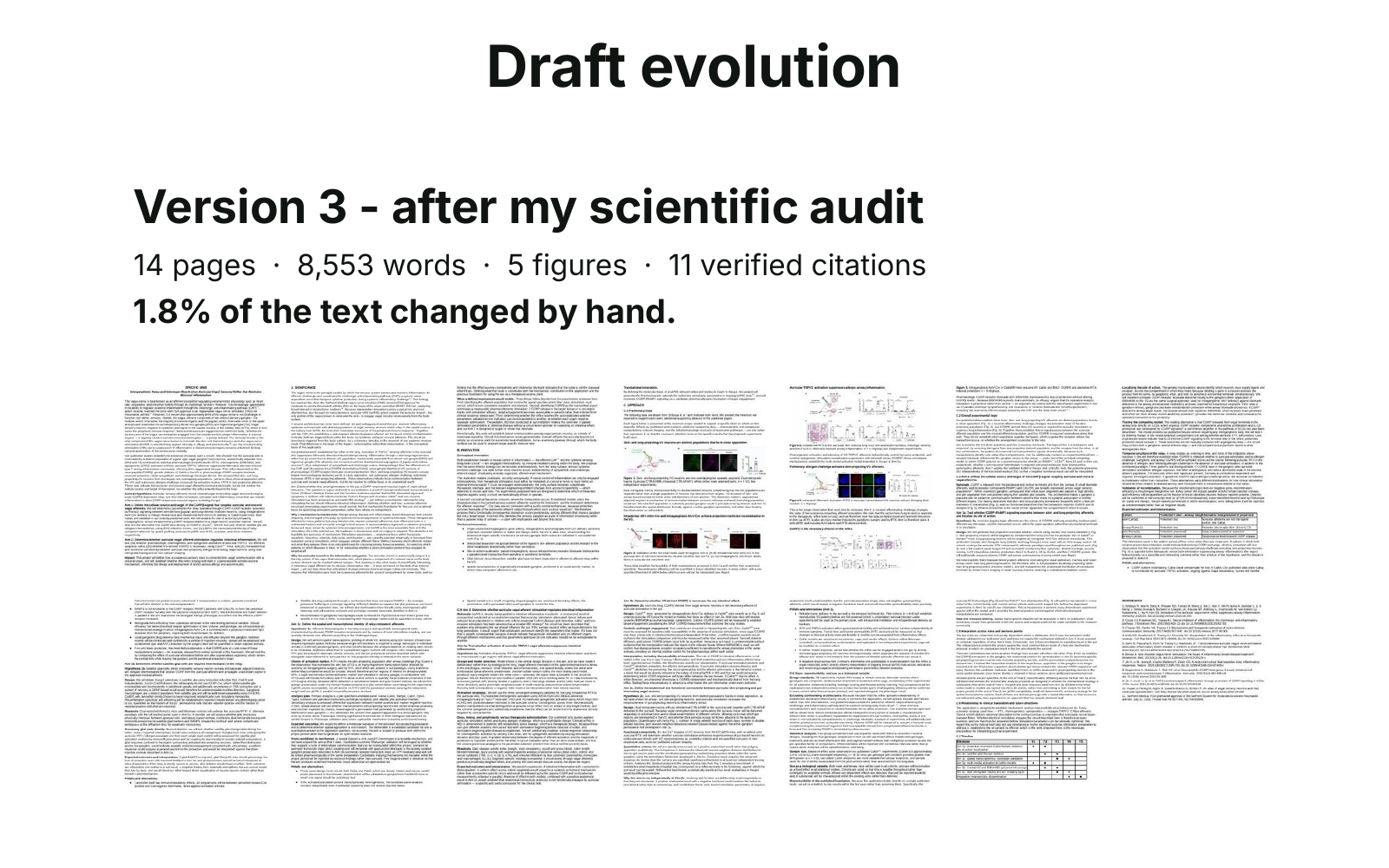
Kim reported changing just 1.8% of the text. After many more hours of manual editing and scientific audit, his third version ran 14 pages and 8,553 words, with five figures and 11 verified citations, and he reported that it conformed to NIH guidelines. His contributions to finalizing a ready to submit grant, amounted to just 1.8% of the text.
What this means for grantwriting and scientific funding as a whole.
The question is no longer simply how quickly AI can write a scientific proposal. It is whether scientists can use that speed to test more ideas, challenge more assumptions, and produce better evidence. In medicine, the cost of being wrong is too high to confuse fluent writing with scientific truth.
For Kim, the opportunity is to make rigorous scientific thinking faster without lowering the standard of proof. In AI research, AI written code is the norm. In science, AI written grants and papers are still rejected by the system even if they are better than the human produced product.
Academic scientists attach prestige, provenance and personal authorship to grants. He argued that cheapening the labor of producing the document moves their value toward the underlying science and the ability to execute it. The ultimate measure of success will not be how many grants one can write, but how much more consequential science researchers can accomplish.